 (Image source: Google / Gemini)
 You've probably heard the stereotype. Someone living in a small town, miles from the nearest Starbucks, is struggling to get a single bar of cell service while leaning over a fence post. It's a classic image, but in 2026, it's also pretty outdated. The truth is that rural life has undergone a massive digital evolution. Although the geography hasn't changed, the way people move through it has. For many farm families, online tools aren't just a way to kill time. They're the glue holding multigenerational legacies together.
We're moving past the idea that technology is something that pulls people away from their roots. Instead, it's becoming the very thing that allows them to stay planted. So what does this actually mean for the average family out in the heartland?
It means that the distance between the barn and the big city doesn't feel quite so vast anymore. It means that "local" is no longer defined just by who you can see from your porch, but by who you can reach on your screen.
Preserving Legacy Digital Tools for Farm Families
Have you ever tried to organize a shoebox full of 100-year-old Polaroids? It's a nightmare. For rural families, those photos aren't just memories. They're a record of the land and the labor that built their lives.
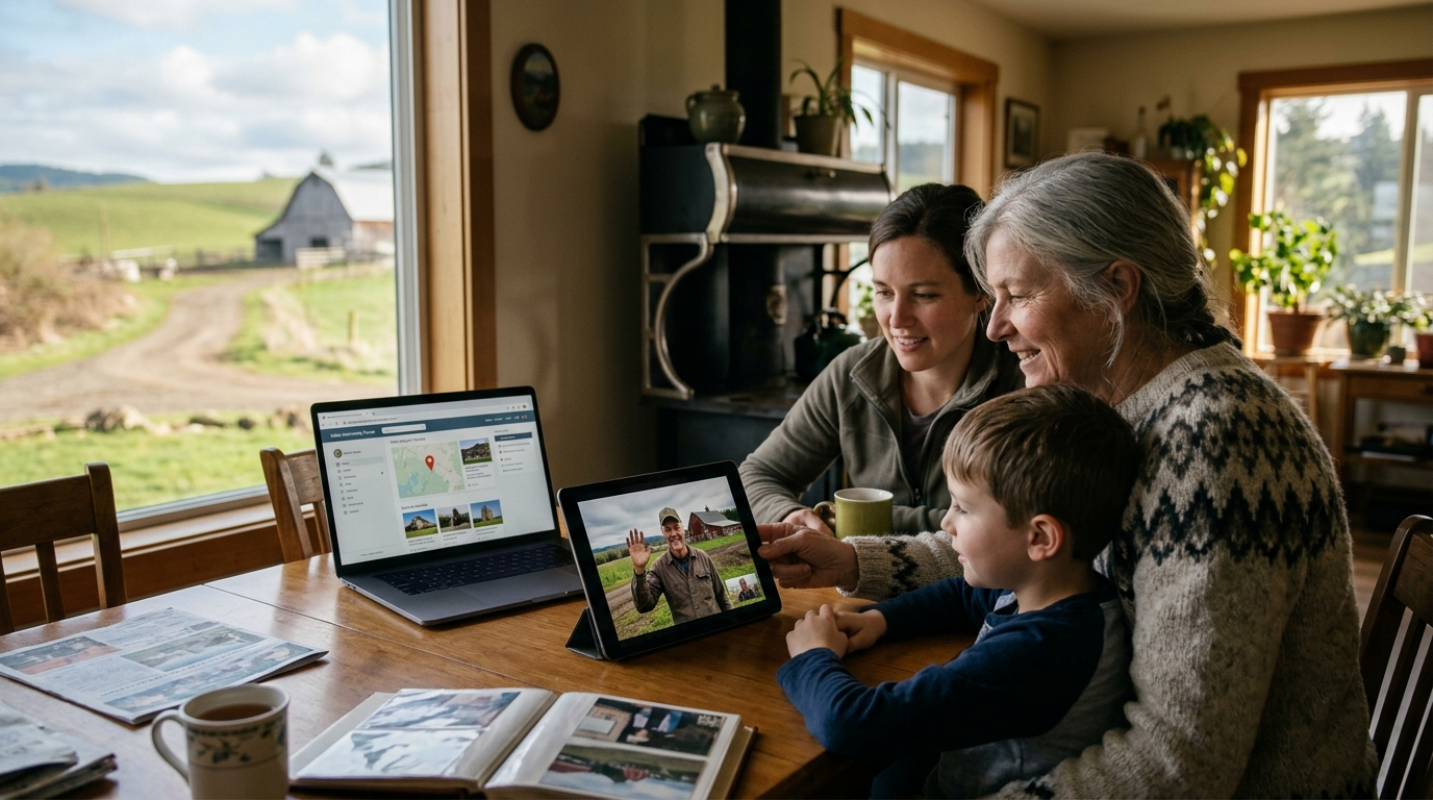
In 2026, families are ditching the dusty boxes for digital archives. They're using private social groups and cloud storage to build a living history of the farm. It's not uncommon now to see a grandfather in Kansas recording an oral history on his smartphone while his granddaughter in Chicago transcribes it in real-time.
This isn't just about nostalgia, though. Managing a family-owned agricultural business in today's world requires some serious tech. Specialized software now helps families track everything from soil health to equipment maintenance across thousands of acres.
• Collaborative Genealogy: Families are using platforms like FamilySearch to build trees that everyone can edit. It’s a way to make sure that the "why" behind the farm doesn’t get lost as the "how" changes with new technology.
• Virtual Archive Nights: Instead of just scrolling through feeds, some families set aside time for video calls specifically to label digitized photos. It’s the digital equivalent of sitting around the kitchen table, but it works even if half the family is three states away.
• Business Transparency: Using shared digital ledgers helps younger generations understand the financial realities of the farm long before they take the reins. It keeps everyone on the same page and reduces the friction that often comes with family businesses.
Strengthening the Fabric of Rural Community Online Tools
There’s a specific way people in small towns use the internet. Research from 2024 showed that rural residents tend to have fewer online connections than city dwellers, but those connections are significantly stronger.¹ Often, the person you're arguing with in a local Facebook group is the same person you'll see at the grocery store ten minutes later.
This creates a "semi-acquaintance" society. You might not know every detail of your neighbor’s life, but you know their tractor broke down because you saw it on the community board.
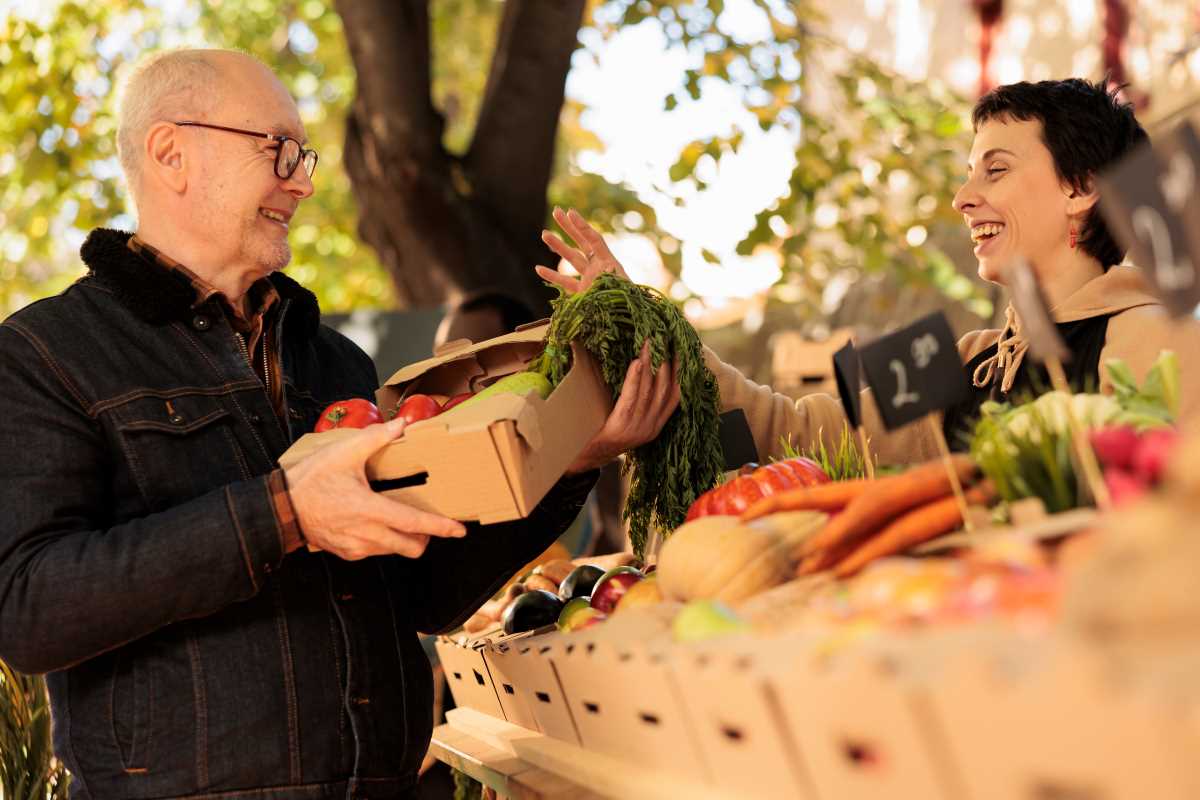
Digital marketplaces have also changed the game for rural artisans. It used to be that if you made the best goat cheese in the county, you were limited to the Saturday morning market. Now, local farmers are using hyper-local apps to coordinate "farm-to-table" sales directly with their neighbors.
• Crisis Response: When a storm rolls through or a road washes out, these digital town squares become lifelines. Real-time updates on weather and road conditions often move faster through private groups than they do through official channels.
• Civic Engagement: Platforms like Go Vocal are being used to gather feedback for school board meetings and town halls. It allows people who are busy working the land to have a voice in local government without having to drive an hour to a physical meeting.
• Resource Sharing: Need a specific piece of equipment for just one afternoon? There’s probably a local group for that. These apps are helping a new kind of neighborly cooperation that feels old-fashioned but moves at fiber-optic speeds.
Staying Connected in Rural Areas Beyond Just Communication
Let’s talk about the "brain drain." For decades, the story was always the same. Kids grow up in a small town, go to college, and never come back because there are no jobs.
High-speed internet is starting to flip that script. In 2026, the ability to work remotely means younger generations can keep their high-paying tech or consulting jobs while living on the family farm. They get to keep their roots, and the community gets to keep its brightest minds.
Connectivity is also about survival. Telehealth has become a key component of rural life. When the nearest specialist is three hours away, a high-quality video consultation isn't just a convenience. It’s a necessity.
But the gap is still there. Although speeds in rural areas have increased significantly over the last few years, the absolute gap between urban and rural connection quality actually widened by over 160% recently. Rural families are often doing more with less, relying on smartphones because they might not even own a traditional computer.²
Despite these hurdles, the "happiness effect" is real. Studies have found that when low-income rural residents gain digital skills, their reported happiness goes up. It provides a sense of social identity that geographic isolation used to strip away.
Top Recommendations
If you’re looking to strengthen your own local connections or manage a rural household more effectively, these are some of the most effective tools currently being used.
• FamilySearch: A massive, free database that rural families are using to digitize records and connect with distant relatives. It’s particularly useful for those trying to document land ownership history.
• Happy Rural App: This platform is designed specifically for small-town life, focusing on local public services and commercial activities rather than global trends.
• Mighty Networks: Many local clubs, like 4-H or historical societies, are moving away from big social media sites to these private, branded spaces to avoid the noise of the general internet.
The Future of Rural Connectivity
As we look toward the rest of 2026 and beyond, the challenge isn't just about getting "wires" into the ground. It's about what we do once they're there.
The next generation of rural leaders needs more than just a fast connection. They need AI literacy to handle modern healthcare portals and government systems. As AI becomes a bigger part of every tool we use, there’s a risk of a new kind of "use divide" where rural families have the internet but don't have the training to make it work for them.
There’s also the delicate balance of preserving rural identity. Technology is a tool, not a replacement for culture. The most successful rural communities are the ones that use digital platforms to improve their traditions, not replace them.
Think of it like this. The internet isn't a replacement for the town square. It’s just a way to make sure everyone can get there, even if they’re ten miles down a dirt road. By embracing a tech-forward mindset, rural families are making sure that their roots stay deep while their reach stays global.
It's an exciting time to be in the heartland. The tools are there, the connection is growing, and the stories are being saved. Rural life isn't disappearing. It's just going online.
Sources:
1. becker-digital.com
https://www.becker-digital.com/blog/rural-social-media-approach
2. ruralinnovation.us
https://ruralinnovation.us/blog/guide-to-rural-digital-inclusion/