 (Image via
Water is the lifeblood of agriculture, the essential ingredient that turns a dormant seed into a nourishing harvest. For centuries, the challenge of getting water to crops has been a central theme of human ingenuity. We have built aqueducts, dug canals, and engineered massive sprinklers that paint rainbows across the landscape. But our traditional methods have often been leaky and inefficient, treating water as an infinite resource to be thrown at a field rather than a precious liquid to be carefully stewarded. As freshwater becomes scarcer and our soils show signs of stress, the old ways of watering are no longer enough.
The future of farming depends on a smarter approach to irrigation, one that delivers water precisely where it’s needed, when it’s needed, with minimal waste. Sustainable irrigation isn't just about saving water; it's about building healthier, more resilient agricultural systems. It’s about keeping moisture in the soil, preventing erosion, and reducing the energy costs associated with pumping. It’s a shift from "spray and pray" to "drip and thrive."
Moving towards these methods is a win-win-win: it’s good for the planet, good for the soil, and ultimately, good for the farmer's bottom line. If you’re ready to rethink how you water, here are some of our favorite sustainable irrigation methods that protect both our most valuable resources.
The Targeted Precision Of Drip Irrigation
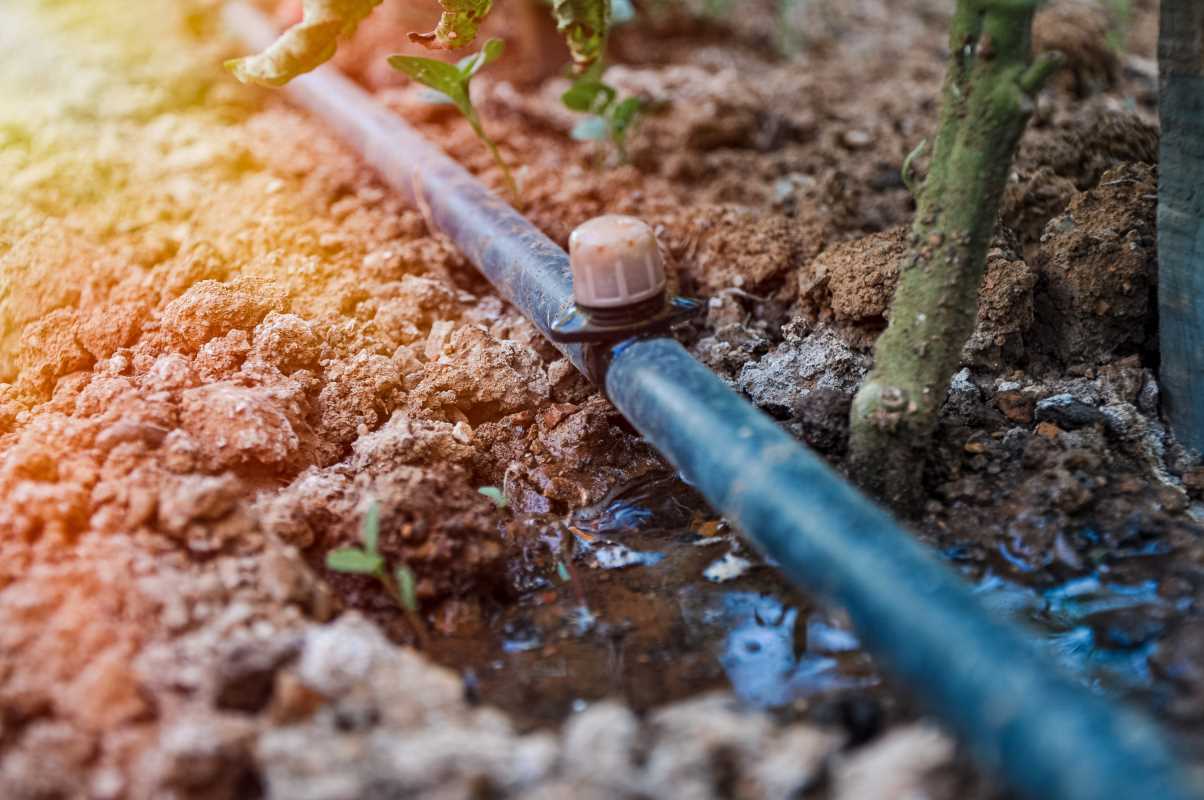
If you were thirsty, you wouldn't stand in the street and wait for someone to spray you with a firehose. You’d get a glass of water and drink it. Drip irrigation applies this same simple logic to plants. Instead of launching water into the air where much of it can evaporate or be blown away by the wind, drip systems deliver water slowly and directly to the base of each plant, right where the roots are. It is the most efficient irrigation method available, often reducing water use by 30-70% compared to conventional overhead sprinklers.
The system consists of a network of flexible tubes, or "drip tape," with small emitters spaced along their length. Water flows through the tubes at low pressure and drips out of the emitters, seeping into the soil one drop at a time. This slow, steady application has profound benefits for soil health. It prevents the soil surface from crusting over and eliminates the runoff and erosion that can occur with flood or sprinkler irrigation. Because the soil between the rows stays dry, it also significantly reduces weed pressure.
Drip irrigation is a perfect fit for row crops like vegetables, berries, and orchards. While the initial setup cost can be higher than a simple sprinkler, the long-term savings in water, energy, and labor are substantial. It turns watering from a brute-force activity into a precise, nurturing process.
The Subterranean Efficiency Of Buried Clay Pots
Long before the invention of plastic tubing and pressure regulators, ancient cultures around the world developed a brilliantly simple and water-wise irrigation method: buried clay pots, or "ollas" (pronounced "oy-as"). An olla is an unglazed terracotta pot that is buried in the ground with only its narrow neck protruding. You fill the pot with water, and because the clay is porous, the water slowly seeps out through the pot's walls, drawn by the pull of dry soil and plant roots.
This is a passive, on-demand irrigation system. When the soil around the olla is moist, the water stays in the pot. As the soil dries, the tension pulls more water out. The plant roots eventually grow around the pot, forming a dense mat that can draw water as needed. It’s an incredibly efficient system, with some studies showing it uses up to 70% less water than surface watering because there is virtually zero evaporation.
Ollas are perfect for small-scale gardens, raised beds, and arid climates. Here's why this ancient technique is making a comeback:
- Water Conservation: It delivers water directly to the root zone with almost no loss to evaporation.
- Deep Watering: It encourages plants to develop deep, healthy root systems.
- Weed Reduction: The soil surface remains dry, preventing many weed seeds from germinating.
- Simplicity: It requires no electricity, no pumps, and has no moving parts to break.
Making or buying ollas is a simple way to create a self-regulating, water-sipping garden that practically waters itself.
The Rain-Harvesting Power Of Swales
What if, instead of just watering your plants, you could redesign your landscape to water itself? That’s the big idea behind swales. A swale is a shallow trench or ditch dug along the contour of the land, with the excavated soil mounded on the downhill side to form a berm. When it rains, the swale catches the runoff that would normally flow off the property, holding it and allowing it to sink slowly into the ground. It is essentially a long, skinny pond that recharges the groundwater.
By planting fruit trees, berry bushes, and other crops on the downhill berm, you place their root systems directly in this zone of concentrated moisture. The trees on the swale act like straws, drawing from the deep reservoir of stored rainwater long after the surface has dried out. It is a passive irrigation system that harvests and stores water directly in the soil, turning a potential erosion problem into a valuable resource.
Swales are a cornerstone of permaculture design and are particularly effective on sloped land. Over time, they can dramatically increase the water-holding capacity of your soil, reduce erosion, and build fertility as the leaves from the trees on the berm drop and decompose. It’s a landscape-scale solution that transforms your entire property into a more effective sponge.
The Smart Technology Of Sensor-Based Irrigation
For a long time, the most advanced irrigation technology we had was a timer. We told the water when to turn on and when to turn off, regardless of whether the plants actually needed it. Today, "smart" irrigation controllers are changing the game by giving the plants a voice. These systems use sensors to make watering decisions based on real-time conditions, not a fixed schedule.
There are two main types of sensors. Soil moisture sensors are probes buried in the root zone of the plants. They directly measure the amount of water in the soil and will only allow the irrigation system to run when the moisture level drops below a set threshold. This prevents overwatering and ensures plants get a drink only when they are truly thirsty.
The other type is a weather-based or "evapotranspiration" (ET) controller. These systems use local weather data, factoring in temperature, humidity, wind, and solar radiation, to calculate how much water your plants have lost and how much they need to have it replenished. A smart controller won't run the sprinklers on a cool, rainy day, saving water and preventing waterlogged soil. These technologies can be retrofitted onto existing sprinkler or drip systems and are one of the easiest ways for homeowners and farmers alike to make a major dent in their water consumption.
The Water-Wicking Action Of Sub-Irrigated Planters
For gardeners with limited space, on patios, balconies, or rooftops, the sub-irrigated planter (SIP), or wicking bed, is a game-changer. A SIP is a self-contained gardening system with a water reservoir at the bottom. The soil sits on a perforated platform above the water, and a "wick" of soil or fabric connects the two. Through capillary action, water is wicked up from the reservoir into the main soil chamber, providing a constant, steady supply of moisture to the plant's roots from below.
You fill the reservoir through a pipe every week or two, and the system does the rest. This bottom-up watering approach is incredibly efficient. There is no water lost to evaporation from the soil surface, and no risk of runoff. Because the plants have access to a consistent source of moisture, they experience less stress and are often more productive than their top-watered counterparts.
Wicking beds are the ultimate low-maintenance, water-wise solution for urban and small-space gardening. They make it possible to grow thirsty crops like tomatoes and cucumbers with a fraction of the water and effort required for traditional containers. It’s a simple, elegant system that proves sustainable irrigation principles can be applied even on the smallest of scales.