 (Image source: Google / Gemini)
 If you've ever spent a morning wrestling with frozen fence posts or an afternoon in a rain-soaked garden, you know that the transition back into your house is rarely graceful. You're usually covered in a layer of the outdoors, and your clean kitchen floor is the last place that dirt should go. This is where the mudroom comes in. In 2026, we've moved past the idea of the mudroom as just a dark closet by the back door. It's now a high-performance transition hub that acts as a decompression chamber between your work life and your home life.
Think of it like a shoreline where the wild waves of the farm meet the calm of your living room. If that shoreline isn't built right, the tide is going to bring a lot of debris into your house. Building a functional mudroom is about creating a space that respects the hard work you do outside while protecting the sanctuary you've built inside.
Foundational Layouts for a Functional Mudroom Design
The first mistake most people make is underestimating how much space they actually need. If you're coming in with bulky coats, muddy boots, and maybe a dog or two, a narrow hallway isn't going to cut it. You need a layout that accommodates what designers now call a launch area.⁴ This is a zone specifically designed to handle the immediate "drop" when you walk through the door.
You should prioritize a wide-open floor plan where two people can comfortably move past each other. If you have the room, the breakout trend for this year is the dirty kitchen or scullery connected directly to the mudroom.² It's a secondary space for the messy stuff, like rinsing off freshly harvested vegetables or arranging flowers, which keeps the grit out of your main cooking area. In fact, mentions of these sculleries have jumped significantly in recent home listings because they solve the problem of farm-to-table mess so effectively.²
Flooring is your next big decision. This isn't the place for hardwood or cheap laminate that will warp at the first sign of a wet boot. You need a workhorse floor. Patterned porcelain tile or sealed concrete are the top choices right now because they can take a beating and still look intentional.¹ If you want to get really smart about it, install heated floors. They aren't just for your toes. They actually help dry out wet boots and damp coats much faster, which prevents that musty "wet dog" smell from taking over the room.⁴
Smart Storage That Elevates Farm Home Entryway Organization
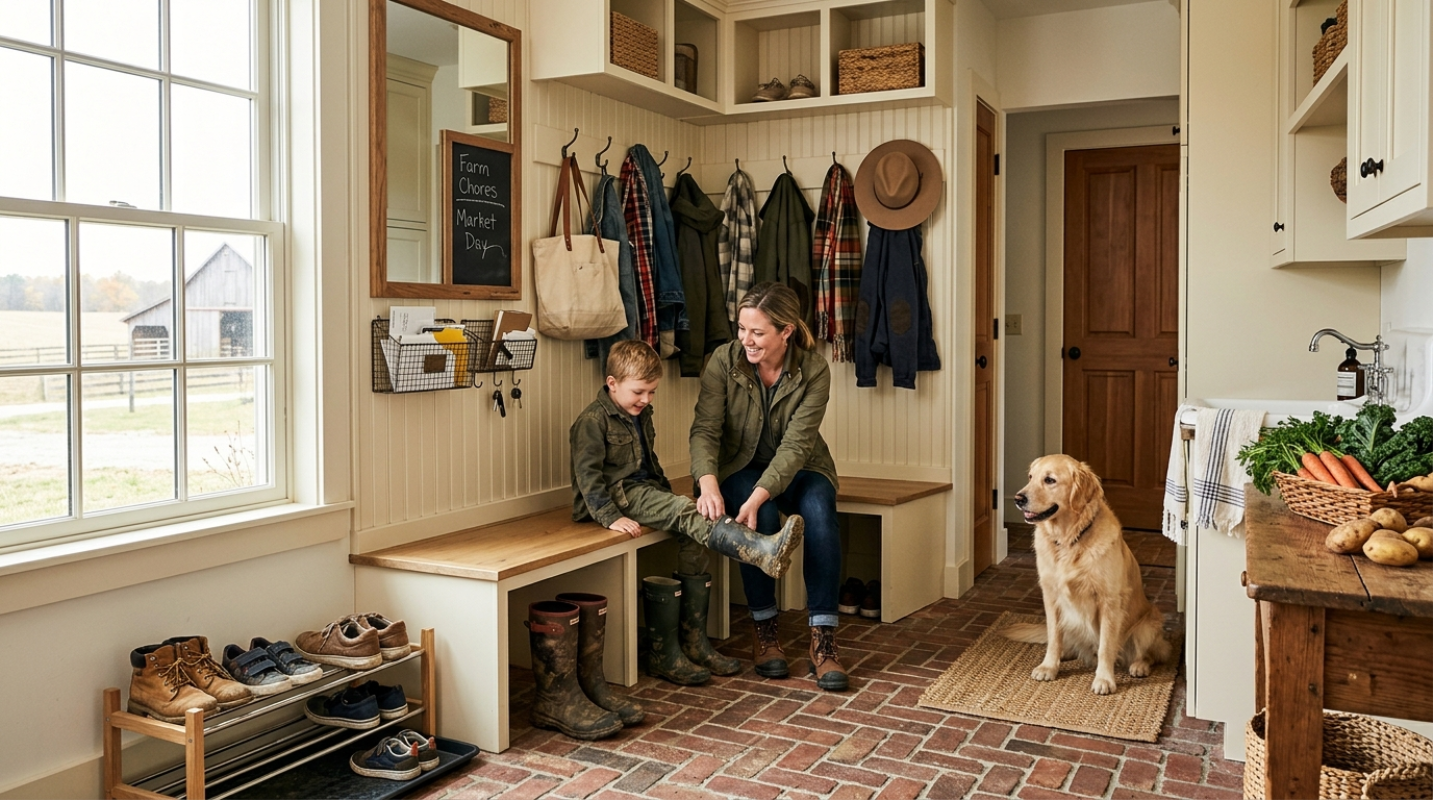
Organization in a farm mudroom is about more than just having enough hooks. It’s about a system that works when you’re tired and just want to get to the couch. A great rule of thumb is the 70/30 split. You want about 70 percent of your storage to be closed cabinetry to hide the visual chaos of mismatched gear, and 30 percent to be open shelving or hooks for the things you grab every single day.
• Individual Lockers: Give every family member their own dedicated zone. Use personalized name tags or even chalkboard paint on the doors so everyone knows exactly where their gear goes. This creates a sense of accountability that keeps the floor clear.
• Vertical Peg Walls: Instead of fixed hooks that are always at the wrong height, use a movable pegboard system. This allows you to adjust the layout as your kids grow or as you switch from heavy winter parkas to light summer hats.
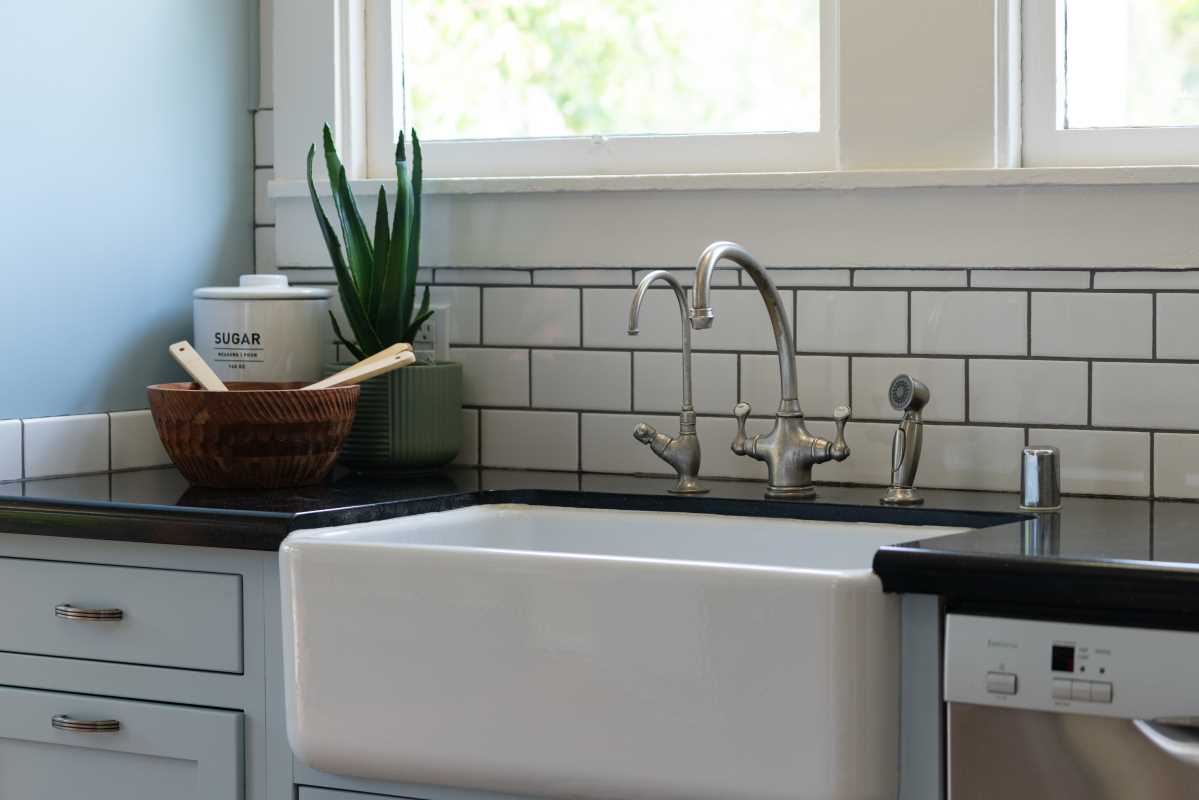
• The Multi-Purpose Wash Station: If you have pets or a lot of muddy gear, an elevated wash station is a game-changer. Experts suggest a width of about 36 inches to handle large dogs or heavy-duty farm boots comfortably.⁴ It saves your back and keeps the mud in the basin instead of on your rug.
• The Landing Pad: You need a small, dedicated spot for the "farm-to-town" needs. Think of a small tray or a wall-mounted organizer for keys, mail, and sunglasses. This prevents the "where are my keys?" scramble when you're trying to head into town.
Curating the Farmhouse Aesthetic
Just because a room is functional doesn't mean it has to look like a locker room. The 2026 aesthetic for mudrooms is leaning heavily into what people are calling the British Barn vibe.⁴ This look uses V-groove wainscoting and natural textures to create a space that feels like it has been there for a century, even if it’s brand new.
We are seeing a big shift away from the all-white farmhouse look. People are embracing "color drenching" with moody, sophisticated tones like deep forest greens, navy, or espresso brown.¹ These darker colors are incredibly practical because they hide the scuffs and grime that are inevitable in a high-traffic entry.
Mixing materials is another way to make the space feel high-end. Try pairing reclaimed barn wood with something sleek like quartz countertops or unlacquered brass hardware. This balance of raw, rugged textures with polished finishes makes the mudroom feel like a deliberate part of your home’s design rather than an afterthought.
Maintenance and Sustainability Tips for 2026
Building a mudroom is an investment, so you want it to last. Home improvement spending is hitting record highs, and a well-done mudroom addition can return up to 35 percent of its cost in added home value.⁵ To get that kind of ROI, you need to choose materials that age gracefully.
Look for eco-friendly options like recycled glass backsplashes or water-saving faucets for your wash station. These materials aren't just better for the planet; they often have unique textures that fit the farmhouse vibe perfectly. For cleaning, keep it simple. If you've chosen the right flooring and cabinetry finishes, a quick wipe with a damp cloth should be all you need.
Smart tech is also finding its way into the mudroom. Motion-sensor lighting is a lifesaver when you’re coming in after dark with your hands full of groceries or gear. Charging drawers are another great addition, allowing you to plug in your phones and tablets inside a drawer so you don't have a mess of tangled cords on your countertops.
Celebrating the Daily Return
At the end of the day, your mudroom is the first part of your home that welcomes you back. When it’s organized and well-designed, it changes the way you feel the moment you step inside. Instead of feeling overwhelmed by the mess you’ve brought in, you can systematically shed the day’s labor and transition into a state of rest.
So, have you looked at your entryway lately? Does it help you relax, or is it just one more chore on your list? By focusing on durable materials, smart storage, and a layout that respects the flow of farm life, you can turn this transition hub into one of the hardest-working and beautiful rooms in your house. It isn't just a place to kick off your boots. It’s the space that lets you leave the work outside and enjoy the home you’ve worked so hard for.
Sources:
1. 2025 Kitchen Trends Report
https://assets.fixr.com/resources/2025kitchen-trends-report.pdf
2. The Dirty Kitchen Trend
https://www.tablemagazine.com/dirty-kitchen/
3. Entryway Storage Ideas
https://britehomes.com/blog/entryway-storage-ideas/
4. Mudroom Design Trends 2025
https://www.housebeautiful.com/room-decorating/entryway-ideas/g63325038/mudroom-design-trends-2025/
5. Mudroom Addition Ideas and ROI
https://borowskebuilders.com/blog/mudroom-addition-ideas/