 (Image via
Long before central heating became a modern convenience, the fireplace was the literal heart of the home. It was the source of warmth, the place for cooking, and the natural gathering spot where stories were told and lives were lived. And in the architecture of the countryside, no feature embodies this primal legacy more powerfully than the old stone fireplace. It is more than just a structure of rock and mortar; it is a monument to resilience, a symbol of shelter, and the undeniable anchor that moors a country home to its landscape and its history.
While sleek, modern fireplaces have their minimalist appeal, they often lack the soul and sheer presence of a classic stone hearth. A stone fireplace is not just an appliance; it is a geographical and emotional landmark within the home. Its mass and texture command attention, drawing you in with a gravitational pull. It speaks of permanence, of a connection to the very earth the house is built upon. It is a feature that feels as if it grew from the ground rather than being built upon it, providing a sense of stability and timelessness that no other element can quite match.
A Connection To The Land Itself
A true country home feels like it belongs to its surroundings, not like it was dropped there by accident. An old stone fireplace is a key part of this integration. Often, the stones used in its construction were sourced directly from the property or the immediate local area. Fieldstone, river rock, slate, granite, these materials are a direct reflection of the local geology. This creates a powerful, intrinsic link between the interior of the house and the natural world just outside its walls.
This use of local materials means the fireplace becomes a microcosm of the surrounding landscape. The mossy patches on a piece of fieldstone or the smooth, worn surface of a river rock are textures that echo the fields and streams nearby. The color palette of the stone, the cool grays of a coastal region, the warm terracottas of the southwest, or the dark, iron-rich tones of a mountain range, grounds the home in its specific place on the map. It is a design choice that says, "we are not just in the country; we are of the country." This physical connection to the land provides a sense of authenticity and belonging that is deeply reassuring.
The Unquestionable Focal Point
In the art of interior design, creating a focal point is fundamental. It is the visual starting point that anchors the room and around which all other elements are arranged. A massive stone fireplace doesn't just ask to be the focal point; it seizes the role with quiet, unshakeable authority. Its sheer scale and textural complexity make it impossible to ignore. You can't help but orient furniture towards it, creating a natural and inviting conversational area.
The fireplace dictates the rhythm of the room. It provides a stunning backdrop for both quiet moments and lively gatherings.
- A Stage for a Crackling Fire: In winter, the fire itself becomes the main event, a mesmerizing dance of light and shadow.
- A Mantel for Memories: The mantelpiece becomes a curated shelf for family photos, seasonal decor, and treasured objects.
- An Architectural Anchor: Even when unlit in the summer, its rugged texture and form provide a powerful visual counterpoint to softer furnishings and textiles.
- A Year-Round Art Piece: The natural variations in the stones, their shape, color, and arrangement, create a unique, large-scale piece of rustic art.
Unlike a television, which creates a passive viewing experience, a fireplace encourages active engagement and interaction. It pulls people together, fostering connection in a way that feels ancient and deeply human.
A Masterclass In Textural Contrast
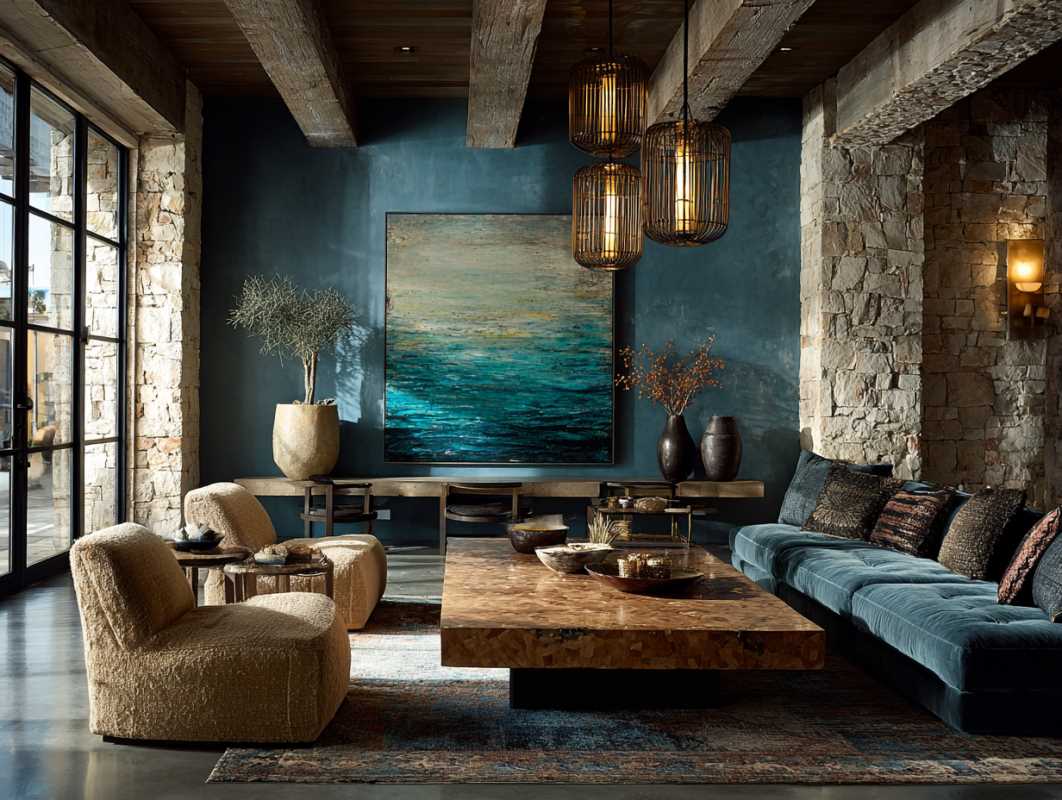
Great interior design is often a game of contrasts, and a stone fireplace is the ultimate team player. Its rough, cool, and hard texture provides the perfect foil for the soft, warm, and smooth materials that make a house feel comfortable. The juxtaposition is what creates a rich, layered, and visually interesting space. Imagine the contrast between the rugged stone face and a plush, high-pile wool rug on the floor in front of it. Picture the difference between the cool, uneven rock and the buttery softness of a leather armchair placed beside it.
This play of textures is what elevates a room from being simply decorated to being thoughtfully designed. The stone’s raw, natural quality makes the other elements in the room feel more luxurious and comforting by comparison. It prevents a space from feeling too flat or one-dimensional. It adds a layer of complexity that engages not just the eyes, but also the sense of touch. You instinctively want to run your hand over the cool, uneven surface of the stone, connecting with the material in a tangible way.
The Embodiment Of Cozy And Secure
The Danish have the word "hygge," the Scots have "còsagach," but the feeling is universal: a sense of cozy contentment, warmth, and security. An old stone fireplace is the architectural embodiment of this feeling. The sheer mass of the stone structure creates a psychological sense of shelter and protection. It feels solid, unmovable, and safe, a bastion against the wind and weather outside.
When a fire is lit within its hearth, this feeling is amplified tenfold. The radiant heat warms the stones, which in turn continue to radiate warmth into the room long after the flames have died down. It is a gentle, enveloping heat, completely different from the dry, forced air of a modern furnace. This physical warmth, combined with the visual warmth of the glowing embers and the sound of crackling logs, creates an atmosphere of profound comfort. It is an experience that taps into a deep, primal part of our brains that equates fire with safety, community, and survival. It’s why gathering around a fireplace feels so right; it’s a tradition coded into our DNA.
A Legacy Of Timeless Durability
In a world of fast furniture and disposable trends, a stone fireplace represents the opposite: permanence and longevity. It is built to last for generations, not just a few seasons. The materials are enduring, and the craftsmanship, often done by hand by skilled masons, is a testament to a slower, more deliberate way of building. A well-built stone fireplace will likely outlast the house around it, becoming an heirloom that is passed down through generations.
This timelessness means it never goes out of style. A stone fireplace is stylistically versatile, looking just as appropriate in a rustic log cabin as it does in a modern farmhouse or a classic country estate. Its natural beauty transcends fleeting design fads. Choosing to build or preserve a stone fireplace is an investment in the long-term character and value of a home. It is a statement that you appreciate quality, durability, and a connection to history. It anchors the home not just in space, but in time, promising warmth and welcome for many years to come.